
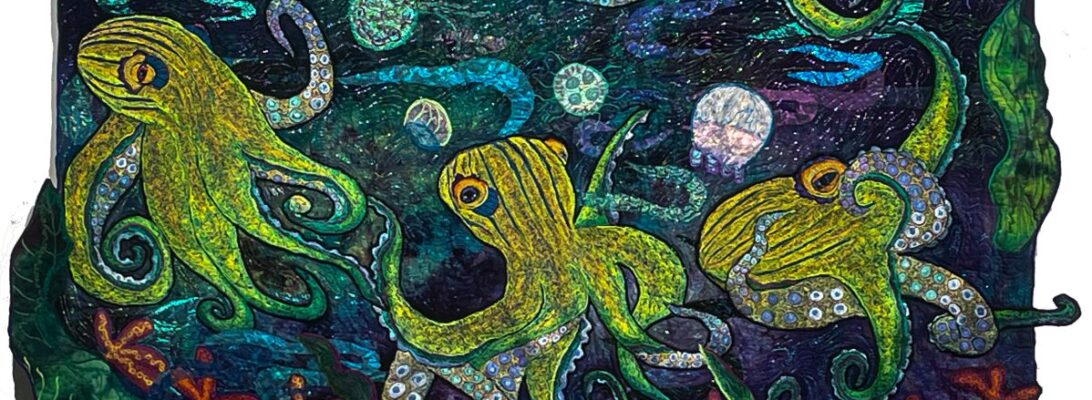

This is a continuation of the last two posts. I’ve been making rubbing plates from modeling paste and stencils. Hunting for Rubbing Plates, and Modeling Paste: All it Needs is Pepperimnt flavor
Now I’m going to show you how that works with paint sticks and hand dye.
Working with rubbing plates is a bit like collage. You fit things in until you get the image you want. Usually I put in whatever I want as my focus, and choose other textural plates to fit in. It’s a dance of design.
The result is sort of like batik, because you have a textured pattern over shifting color. But you have so much more control over the pattern.
You can use it for images, but it does very well building texture, atmosphere, and elementals like clouds, water, smoke and flame.

IIt als works for filling in background. You can either create space or texture that builds the shapes.
I still wish I could do this with my own drawings. A girl can dream. I’ve gone through pretty much all of the rubbing plates that aren’t for the nursery, animal tracks and Christmas. But stencils…there seem to be a million stencils.

I also found Japanese stencils. I’m always wowed by Japanese art and these moved my furniture. Last week I showed you how to make the rubbing plates. Here is what I did with them.
The fish and crane images are great fun. But what I’ve really been pushing for is water: waves, ripples, eddies, streams, mist and waterfalls.


The backtround is filled in with several rubbing plates made from stencils made into rubbing plates.


I’m not even what comes next on this. Beach Grass? Maybe beach roses? The water itself is pretty powerful here.