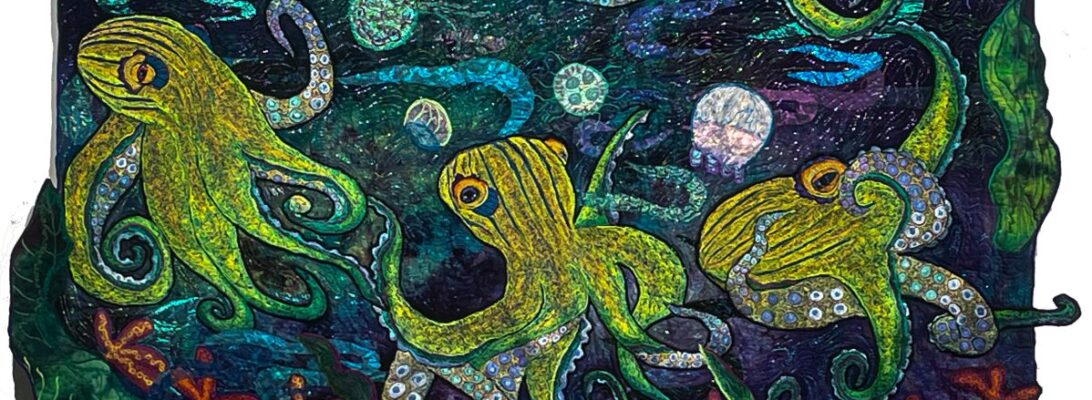
Popping Up: The Pop Art Element

I’m not a very abstract person. I’m not good at reducing forms or working without a visual reference. Of course, I’m not always wedded to reality either. I believe that when we stray from a photographic reality, who we are, what we mean, and what we see have a way of coming out to say, “Hi!” And a lot of other chatter as well.

For a long time, reality was the task of art. Up through the Renaissance to modern art, we’ve lauded the ability to make something that looks real. I find that wearing as an artist. If you want complete realism, you probably want photography. You’ll see your image just as it is. Once we had photography, realism stopped being a goal and became something accomplished.

Photography works for the surface. It fails me for movement, for mood, for expansion off the canvas, and for the feeling it gives me. I have nothing against photography. But it usually leaves me a little cold.

So once we left realism as the only goal, there was room for all kinds of experimentation.

One of the experiments was Pop Art. There were many versions of this. One was to repeat an image in rows or patterns in bright colors. This is Andy Warhol.

Andy Warhol, Converse Tennis Shoes

I’m not interested in tennis shoes, but I do want to see what happens if I put repetitious octopuses in bright colors together. This is the first octopus. The plan is to put four together. I’m not sure if I’ll use rows or weave their tentacles together.

The colors on the octopuses echo the hand-dyed fabric I’m using. They have a light source that shifts the colors through the tentacles.

Here are three more in different states of completion. When we’re done, we’ll see what pops up.

Going Straight: Stretching into Different Stipple Patterns

I’ve been working on the octopuses for around five months. There are seven in all, five finished. I’m pleased to say they make a good start for a show.

But I don’t want quilts that look like the same pieces, only in different colors.

What defines a work? Certainly subject matter. Certainly color. But textures also make pieces stand from with each other.

I’ve leaned heavily into oranges and blues on this collection, but I think there’s a good range of colors. The background is always the color of your sky, the mood of the piece, and its definition

The octopus’s garnet stitch texture connects the grouping.

Something more subtle separates them.

The stipple treatment establishes the movement of the water, but it also visually separates the pieces from each other.

Confession. Left to my own, I have three stipples I use. I really felt I needed to stretch a bit here, particularly because I want the quilts in this series to stand up as separate works.

Version 1.0.0

Leah Day’s book, 365 Free Motion Quilting Designs has become a go-to reference for me. I don’t feel a need to copy her designs, but it’s full of a lot of stimulating ideas. It’s one of the few books I store right by my machine. It’s a worthy resource. I turned to it for some different stipple ideas.

I almost never do straight lines in my work. I’m not very good at them. But I love the bubbles and stripes here. It’s almost like wallpaper for the quilt.

Here are details of the other quilts, showing the different stipples.

Leah’s book is a lovely springboard into other possibilities. It’s available on Amazon

So I went straight on one of them and survived. Maybe I can do straight lines.

The Big Black Line: More than Just an Outline

Every image has to be attached to a quilt at some point. There’s more than one way to accomplish that. But the one I use most is a solid black line of polyester zigzag embroidery.

That sounds dull, doesn’t it?

The black poly outline does more than you would suppose. It creates a crisp outline.

I’ve tried using other colors. Bright, light, neon colors. Nothing gives the same punch as black.

It’s not true of flowers. I can use a bright color outline on a flower that pops it perfectly.

The outline defines the edge visually. If you want it to show up across the room, you’d better make it bold. The outline is the finish line.

I’m just finishing outline octopus 4. One nurse shark is outlined. One is not.

But it does two more things. It makes the image puff just a little. I like the 3-D effect.

And it holds images down solidly. These embroideries wave around the edges like the flag on a windy day. A light line of stitching does not hold them down well enough.

I did not need to cut either the sharks or the octopuses, to get them to lie flat for this quilt. All of it was done with a heavy black outline. The thread traps the edges and mashes it into place.

I used to use black metallic thread to outline metallic images. But since that has to be done with metallic thread in the top, it’s an all-day sucker. Takes forever. Endless breakage. The polyester thread doesn’t have the same shine. But I only have so much hair I can pull out in one afternoon of sewing.

Step-by-Step Guide to Using Color Theory for Thread Art

Outline, dark base, shader, and the beginning of the blue range

The nice thing about color theory is that it works across all kinds of media. What changes isn’t the color theory, but the way the media is applied.

Color theory for thread is different only in the fact that you really don’t mix colors. Instead, you lie them next to each other, and your eye mixes them.

These nurse sharks are part of my octopus garden. I don’t have their octopus stitched yet, but they were compelling. I love the spiky shapes. They will have orange-yellow stripes. I’m not quite there yet. Right now, I want them round and shaded, with a clear indication of which side is up. I need smooth color for that.

Smooth color creates a color range.

The formula for it is

  • A dark base color
  • A dark complementary color as a shader
  • A range of colors in the base family
  • A bright color as a shocker
  • A lighter or brighter shade of the base color to finish.
  • If the subject is too large, I can zone the areas of the image and repeat the formula in a set of lighter or darker shades.
  • I usually work light to dark. The last color will be the most prevalent, so keep that in mind. Sometimes with fish or frog bellies, I color the dark to middle section, add the lightest color on the other edge, and work in my darker colors, so the tummies aren’t so blatant.
Green as a shocker

I chose green as my shocker color. Usually, I would have used either the blue or purple complement, but orange is so strident. I will use yellow for the stripes, but I think I’ll brown them out so they don’t scream at me.

It takes a fair amount of courage to add the shocker. The shader layer makes visual sense. The shocker layer screams at you. There’s a terrible urge to rip it out immediately. But it quiets down once you put the next layer of the base color. And the color is smooth without being bland. The shocker is an electric spark in a range of smooth, quiet color.

It’s time consuming, but I love the base colors. Between the shocker and the shader, the color has a splash of excitement, but creates a flow color base.

What will they look like with yellow-orange stripes? I expect they’ll be quite jazzed up. I’ll show you next week.

Tax Sale

We got hit with an unexpected and awful tax bill. So all my quilts are on sale.

New, old, large, tiny quilts all available at the best prices.

I don’t ever want to ask for money. Instead, I offer you my very best work at my very best price. If you’ve wanted a quilt of mine, this is the time. I’m also open to offers.

Thanks!

https://www.etsy.com/shop/ellenanneeddy

A Series of Lessons

Over the last couple of months, I’ve been working on a series of fish in the waters. This is an important symbol for me. It explores surviving strange waters, rising out of the depths, swimming with the current, and swimming against the current. It’s about flowing water and changes. It really checks all my boxes. It also serves as a connection with my father, whose religion was bass fishing. Since going fishing made better people than going to church, I respect it deeply, even if I won’t eat fish. I live in water.

So I noodle at the fish-in-the-water image often. If you’ve been following the blog, you know I made one quilt I loved, and I wanted to see whether I could recreate the energy. Not the fish or the river, but the energy of the piece.

Epic fail. I made a very nice other piece with similar hand dye, a fish I drew 5 times before I was pleased, and similar oil paint stick rubbing for the forest in the background. I hated the first fish I embroidered. I stitched a more active catfish, that was better.

Then I took a break and went to find the studio floor. Again. Everything flutters to the floor except the things that go clunk.

There it was, the best background for the embroidered fish I rejected. The fabric made a vortex, so I did too, out of stitching a swirl of sheers.

I didn’t learn anything technical from the exercise. But I did confirm what I already knew. It does me no good to recreate something. Another piece will need different components and approaches. I didn’t need to be making arbitrary rules for myself. I needed to listen to each piece to give it what it needs. If I thought I was in control, that was delusional.

Maybe this is a right-brain, left-brain thing. I’ve been struggling to organize both in the house and the studio. That’s a very left side of the brain thing to do. It’s foreign thinking, but it’s less grim than Swedish Death Cleaning. You know what? No one ever did teach me this. Certainly not my mother.But that shouldn’t stop me. If you don’t know how, you can learn.

So cleaning does turn into art. Eventually.

As Don says, “I’m a man. I can change. If I have to. I guess.”

I can too. If I have to, I guess.

Of course, I hung the quilt up and noticed that the wonderful spiral stitching in the center is unnoticeable 3 feet away. Small flowers and thick thread to the rescue. Of course, the pond has floating flowers.

The change isn’t a technique or a new technology, really. The change is learning to listen better.

Woman Proposes, Art Laughs

A while back I decided to see if I could recreate the energy from a piece I was particularly pleased with. If you’ve been following the blog, I’ve documented it as I’ve worked.

I wouldn’t call it a success. I went through three separate fish, not happy with any of them. I embroidered the best of them and still felt bland.

So I passed on the bass and did a catfish, which I’m not displeased with. The bass went back into the pile.

I can plan all I want. There’s a serendipity to art that is inescapable. While I was scraping out the studio, I found a piece of fabric I’d totally forgotten about.

All of a sudden, my wallflower fish had gone dramatic. I built him a whirlpool/vortex.

My fish fooled me again. I spent some time embroidering some nice metallic minnows that shyly blended right into the background.

They are pretty, but they have no punch.

So I’m trying these brighter gold minnows. I’m still not sure. They’re embroidered from poly, and they might stand out too much. I may need to do some from metallic gold.

I’m in charge. Right.

Planning a Surround: Family Planning for Octopuses

I’ve been noodling around the idea of a series planned as a surround. I’ve done many series over the years, but this is different.

I suppose you could plan a series. But I’ve never seen it happen. You do one quilt with a subject that is either so fun or compulsive that you do another five more. That’s an organic process that I enjoy. But it doesn’t lend itself to consistency.

These birds just happened. I love the shape of them, the bills and that crazy pink coloration. So I’ve made a number of roseated spoonbills.

We’re talking something different here. A surround has to be planned so that each piece flows into the other one. I can do that somewhat with the drawings. They need to flow across the different quilts into eachother. I can do that somewhat with background images. Rocks and seashells can make a pathway. I can also do that with small fish. I’m thinking of clownfish and something small and gold in color. That is the plan.

The coloration should be easy. The hand-dye needs to be all of the same intensity, and we’ll keep the octopuses bright. They should fitin with each other well.

The first octopus is embroidered and ready to place in background elements.

The second octopus is almost embroidered. I need to outline the suckers.

He’s already had a large change. Originally, I had one sucker tentacle closer to the head. It worked in the drawing but not in execution. So I cut it out, and moved it. I think it works better.

shell rubbings from another project

The next steps will be tricky. I plan to rub seashells into the fabric on the bottoms of all of these. They’ll need to fit into eachother. I’m not sure if I can display them all on one photo wall. But they need to dance across four pieces altogether. The last time I did something this large, I hung it off the back porch of my apartment building and walked down the alley to where I could see it as a whole. That was three homes ago. We’ll need to figure it out.

I’ll keep you posted as I work on this. I think it’s going to be a wild ride.

Making Waves: Stitching Waves into Water

I’ve spent a lot of time working with making rubbing plates. Here’s one of the reasons. There are ways to make waves out of sheers and lame, or stitchery, but I want that feeling of white foam and spray.

It’s pretty. But it lacks definition. I can approach this with thread and/or sheer applique. It’s also a test case for my cranes.

This is what I’m aiming for. I’d rather not make my mistakes here. I’m waiting on some beach grass stencils to finish off this top. But I’m still unclear how I want to treat my water.

The two pieces give me the opportunity to try different ideas and compair them. For Making Waves 1 I treated the white bits as different from the darker blues. I stitched it with 40 weight madiera metallic supertwist first. That was miserable. Sometimes Supertwist will work with a 90 topstitching needle and a lot of Sewer’s Aid. This wasn’t that time. I got about three stitches before breakage. That’s past my tolerance.

So I went to plan b

So instead. I stitched the white waves from the top with poly 40 weight. The stitching from the top marks the back Then I traced the stitching with #8 weight candlight, rainbow.

I like this a lot. I went back in after that and stitched the rest with matching poly 40#.

Making Waves 2 is my second possibility.I stitched the waves withpoly 40#. More subtle but I like it too.

I also tried two different approaches to my sheer overlays. For Making Waves 1

I used white and purple cheesecloth. I found it too clunky.

Making Waves 1 sheers with cheesecloth

I like this treatment better. Metallic lace and white organza just blends in better.

Making Waves 2 sheerswith fish d1

So to recap. I like the thick threaded Candelight on the waves, 40 weight polyester on the darker sea, and metallic lace and organza on the waves. What do you think? What would you choose?

For more information about bobbin work, check out Arse Over Teakettle: The Stubborn Art of Bobbin Work